Showing posts with label folklore. Show all posts

Wednesday, 11 January 2017

Shoe Folklore

Red Shoes, No Knickers

A mid 20th century saying denoting the person in question is only concerned by outward appearances. A similar phrase is All fur coat no knickers or more literally all design no substance.

Red shoes have become cultural icons due to their occurrence in various pieces of literature.


Moira Shearer can't stop dancing in The Red Shoes

Judy Garland follows the yellow brick road in ruby slippers in The Wizard of Oz.


Jayne Mansfield and Marilyn Monroe prove irresistable in Gentlemen Prefer Blondes.


Beaded red shoes c1905


Red suede court shoes by Holmes 1950s


Red glitter sandals by Rayne c1975


Guradsman sandals by Charlotte Olympia c2015

Sunday, 24 July 2016

Shoe Folklore

The Cobbler

Although most dictionaries still list cobblers as being menders of shoes, common usage has twisted their role to being makers of them. The meaning of the word changed in the mid twentieth century, originally shoemakers were known as cordwainers. The cordwainers established a guild in the medieval period and woe betide any cobbler who overstepped his brief.

Historically shoes were an expensive item which warranted repair so cobblers patched and soled and latterly re-heeled shoes, these days very few people bother to have more than new heel tips put on their shoes hence the rise of the heel bar.

The often visible nature of the cobblers art gave rise to several idiomatic phrases such as;
Cobbled together meaning made badly of anything to hand or
Load of old cobblers (or simply Cobblers!) meaning rubbish or that the person was telling a tall story.
Let the cobbler stick to his last meaning stick with what you know.


Mending in World War Two
A rubber Philips sole has been added as a preventative measure and only a quarter of the heel has been replaced to conserve materials.


1960s. This pair has had the whole heel replaced not just the tip. Judging by the condition of the rest of the shoe which has been reglued where the crocodile has cracked they were obviously a much loved pair.

Tuesday, 21 June 2016

Shoe Folklore

Down at Heel: To be poor

Recorded in 1732 in William Darrell's A gentleman instructed in the conduct of a virtuous and happy life

Shoes and shoe leather were expensive, for the poor repairs were costly and as they often only had one pair of shoes, difficult to manage.

The phrase well heeled may have arisen as an antidote to this however there are other theories on the origin of that - see Phrases.org.uk


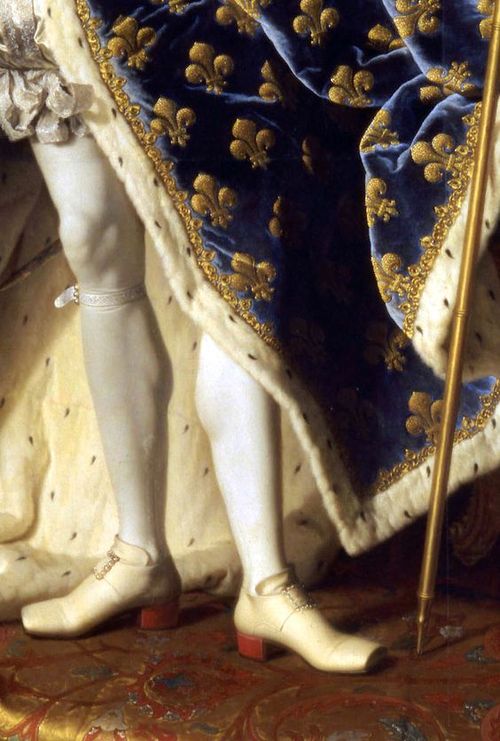
Louis XIV (1701) by Hyacinthe Rigaud (again).

Saturday, 12 March 2016

Shoe Folklore

To be square: old fashioned or out of date.

Derived from “square toes” in the late 18th century, a derogative term denoting the person (usually a man) still wore the styles and attitudes of the early part of the century.


Louis XV of France c1730 by Hyacinthe Rigaud (detail).