Showing posts with label wartime restrictions. Show all posts

Monday, 18 June 2018

Ferragamo's Cellophane Shoes

Ferragamo is well known for his innoavtive use of unusual materials or skins.

His use of cellophane came about, like many of his other ideas, due to shortages during the 'autarchy' of the late 30s and 40s.


Shoe 1941

The Ferragamo website tells us that he came up with the idea of using cellophane when he bought his mother a box of chocolates and unwrapped one. Early designs used weaving and crochet in the same way the raffia shoes were made, indeed the same poeple made them.


Sandals 1950-55

Later the cellophane was used in conjunction with a linen or cotton string and merely glued down. The designs continued to be successful until the 60s when more new materials became fashionable.


Sandals 1955-58

Saturday, 8 July 2017

Lotus Brogued Courts: As Seen In...


Lotus tan court shoes c1945

Typical war time indicators are the different coloured woods in the stack heel, the fact that it's under side hasn't been varnished. The scant lining materials - cloth under the vamp, no heel piece and the leather for the sides and insole very thin.

Tan court shoes were a popular choice during the war years and into the 1950s when resources were scarce. Tan will go with any colour even black. Lotus weren't the only company to consistently show this style in thier adverts.


Advert November 1943

Style variations were subtle and restricted by the austerity rules. The details of the broguing often hid imperfections in the leather or were there to join small pieces of leather. The height of the vamp varied, high during the war, lower afterwards. The heel height was restricted to two and a half inches despite the illustrations in the adverts suggesting 3 or 4 inches.


Advert January 1945

Shortages began with rationing in 1940, but by 1943 with what was left of the manufacturing industry going all out for D-Day shoes became almost impossible to find. The adverts consistently told their customers that the style illustrated might not be available and if that was the case to choose from those available (and like it).


Cartoon in Punch 1941

The austerity rules were relaxed at the end of 1945 but there were still shortages of materials and labour which were to last up to the early 1950s. However, the shoe companies began to advertise new styles and colours even if they weren't making them yet. But the tan court shoe continued....


Advert 1945

Wednesday, 2 March 2016

Sensible Shoes: Wartime Footwear 1942-45

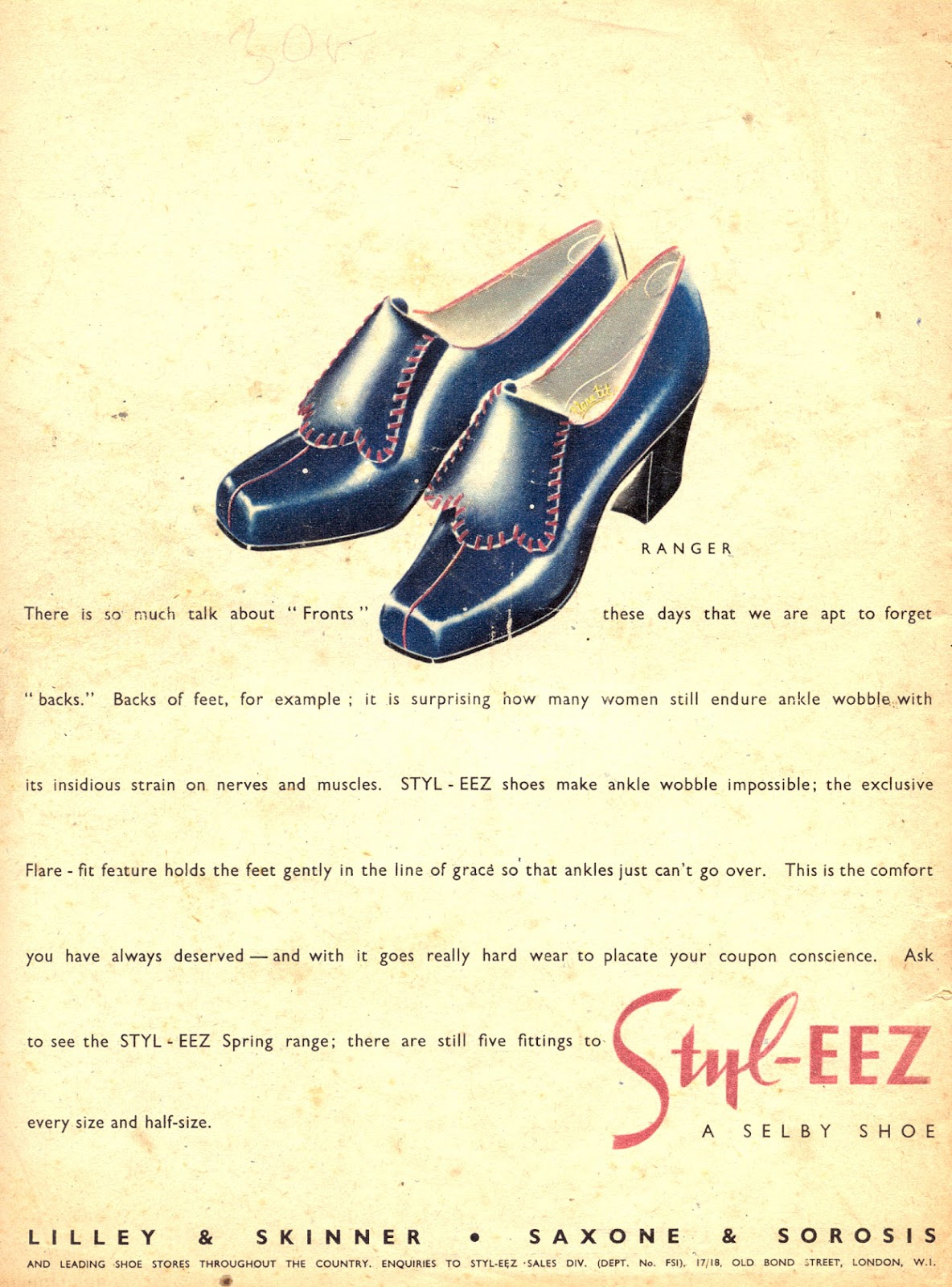
Wartime rationing and the introduction of the utility scheme greatly restricted the styles available. Under the austerity rules all shoes had to completely cover the foot.

March 1942


March 1942

So no peeptoes or slingbacks. Heel height was also restricted, though you might not think so when looking at the adverts, a classic case of idealism - if the models can have 7ft legs then the shoes can have 4 inch heels.


May 1943


April 1943

Colour and textured leather finishes hid imperfections in the hides. Rubber soles and elastic gussets were banned, Zips became popular for a short time as they were easier to close in the blitz.


February 1944


February 1944

Low wedges were very popular as they supported the arches and wooden soled shoes made an appearance in 1943 but did not enjoy extensive popularity as the hinged soles let in the rain.

February 1945


July 1945

The spring of 1944 was a particularly bad time to find shoes, with most production aimed at D-Day civilians had to spend long hours in queues and there were stories of having to obtain tickets just to join the queues.

First published on Vintage Chic 21-October-2009